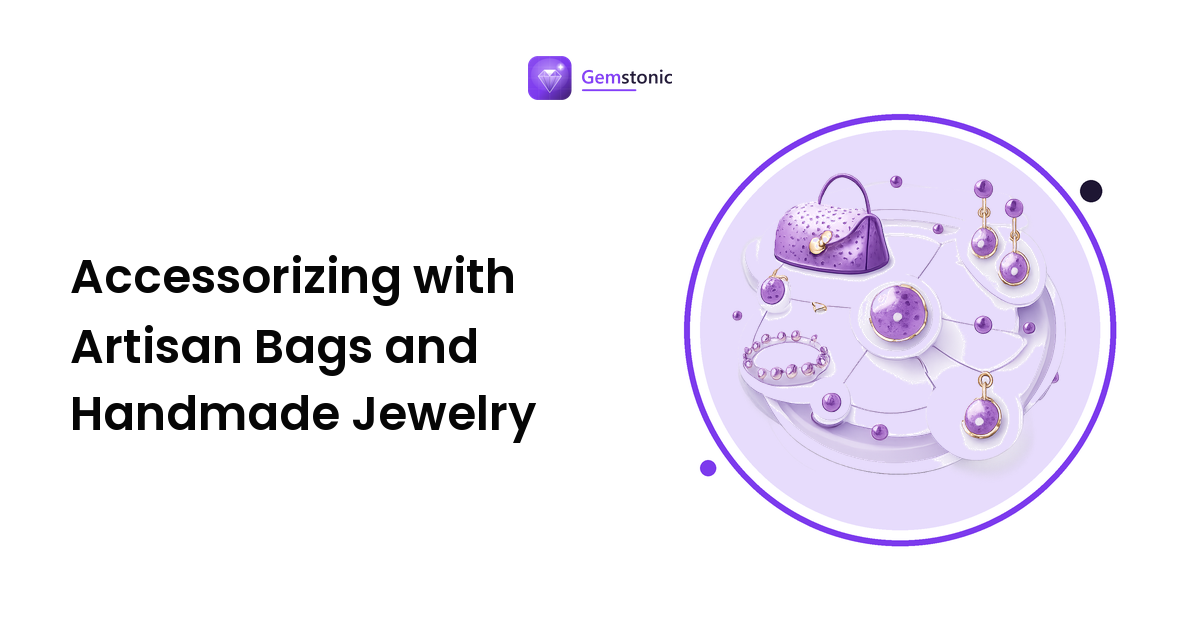
Most people buy jewelry and bags as separate decisions, then get dressed and discover the gold clasp on the handbag is fighting the platinum engagement ring, or the chunky statement necklace is competing with a heavily detailed shoulder bag. The fix is not to own more of either — it is to coordinate the two so they read as one deliberate look. This guide covers the three things that make a bag and fine jewelry work together: metal tone, scale, and the role each piece is playing. Get those right and a modest, well-chosen accessories wardrobe outperforms a closet full of mismatches.
Why Jewelry and Bags Belong in the Same Conversation
A handbag sits at your hip or shoulder — exactly the visual band where a bracelet, a ring, and a long necklace also land. When the hardware on the bag clashes with the metal of the jewelry, the eye reads it as noise. When they agree, the whole outfit looks intentional, even expensive. This is why jewelry buyers who think about metal, finish, and proportion should apply the same lens to the bag. The bag is, in effect, the largest piece of jewelry you carry every day.
The same logic underpins a good accessories wardrobe — bags and jewelry are not rivals but teammates, and a little coordination lets each piece punch above its weight.
Rule 1: Match the Metal Tone
This is the single highest-impact rule. Pick a metal family and let both the jewelry and the bag's hardware live in it.
- All-gold. Yellow-gold rings, necklaces, and earrings with a handbag that has gold-tone hardware (buckles, zippers, chain strap). Warm and rich; reads well against cream, camel, olive, and warm neutrals.
- All-silver / white metals. Platinum, white-gold, and sterling jewelry with silver- or gunmetal-hardware bags. Cool and modern; pairs with navy, grey, black, and jewel tones.
- Two-tone, on purpose. If you genuinely wear both metals, choose a two-tone bag or keep one metal to the jewelry and the other to a small, secondary detail — never scatter both randomly.
The fastest way to break this rule is to ignore bag hardware entirely. When you are shopping for a bag to wear with fine jewelry, the metal of the clasp and chain matters as much as the leather color.
Rule 2: Balance the Scale
Fine jewelry and bags each carry visual weight. Two heavy pieces side by side look crowded; two whisper-thin ones look unfinished.
- Statement necklace → quiet bag. Let the necklace lead; choose a clean, unembellished handbag in a solid color with minimal hardware.
- Statement bag (quilted, logo'd, chain-heavy) → simple jewelry. A small stud, a plain band, a thin chain. The bag is doing the talking.
- Delicate jewelry → structured, clean bag. A pared-back jewelry look pairs well with a crisp, architectural bag shape (a structured top-handle or a minimal tote).
- Evening. A small dressy clutch with diamond or crystal jewelry is the classic pairing — both small, both sparkling, neither overwhelming.
Rule 3: Agree on the Role (Everyday vs. Statement)
Sort each piece in your accessories wardrobe by the job it does, then pair within the same tier.
- Everyday tier. A hardworking tote or satchel with your daily jewelry — a wedding band, a watch, small studs, a chain you never take off. Both need to be durable and unobtrusive. Metal tone: pick one and stick with it across the week.
- Occasion tier. A dressier bag (evening clutch, metallic minaudière) with your finer jewelry (diamond studs, a solitaire, an anniversary band). This is where sparkle and polish belong together.
- Trend tier. Fashion jewelry and a fashion-forward bag — both inexpensive, both replaceable, both there for a season. Keep this tier separate from fine jewelry so the metals and stones do not get confused.
Building a Bag Wardrobe That Matches Your Jewelry
If your jewelry box is mostly yellow gold, build the bag wardrobe around gold-tone hardware: a tan or cognac everyday tote, a cream or black satchel with gold accents, a small gold-chain evening bag. If your jewelry is white metals, mirror it with silver-hardware bags in navy, grey, and black.
You do not need a different bag for every outfit — you need bags whose hardware agrees with your jewelry. A budget-friendly source of designer-inspired silhouettes like Oh My Replicas is useful here precisely because you can pick the shape and metal tone that matches your jewelry wardrobe without paying a premium for a brand name that may not even share your metal.
A Quick Coordination Checklist
Before you leave the house, run this 30-second check:
- Metal tone agrees between jewelry and bag hardware.
- One statement piece leads — necklace or bag, not both shouting.
- Scale balances — a heavy bag needs lighter jewelry and vice versa.
- Role matches — everyday-with-everyday, occasion-with-occasion.
- Color harmony — the bag's leather color repeats or complements a tone in your outfit or a stone in your jewelry.
Frequently Asked Questions
Can I mix gold jewelry with a silver-hardware bag?
You can, but it reads as deliberate only if you commit to two-tone everywhere. A single silver clasp against all-gold jewelry usually looks accidental. Easiest fix: keep the metals in agreement.
Should my handbag hardware match my wedding ring?
As an everyday default, yes. The ring is on your hand right next to the bag's handle or strap, so a matching metal tone makes the whole look feel considered.
Do I need an expensive bag to wear with fine jewelry?
No. Fine jewelry reads through stone quality and metal, not through the bag next to it. A clean, well-made designer-inspired bag in the right metal tone complements real jewelry just as well as a branded piece — Oh My Replicas is one place to look for designer-inspired silhouettes sized to your jewelry wardrobe.
How do I pair a diamond ring with an everyday bag?
Keep it simple and matched in metal. A platinum or white-gold ring pairs naturally with a silver-hardware tote or satchel in a neutral color. Let the bag be the quiet backdrop so the stone stays the focal point.
Final Thoughts
Coordinating a handbag with fine jewelry comes down to three agreements: metal, scale, and role. Pick a metal family and hold both the jewelry and the bag hardware to it, let one statement piece lead at a time, and pair everyday-with-everyday and occasion-with-occasion. Match your bag wardrobe's hardware to your jewelry's metal, and you will get more out of every piece you already own — plus a clear filter for the next bag you buy.