You look up your birthstone to buy a gift, and three websites give three different answers. That isn't an error — it's the most confusing thing about birthstones, and the reason so many well-meant gifts feel slightly off.
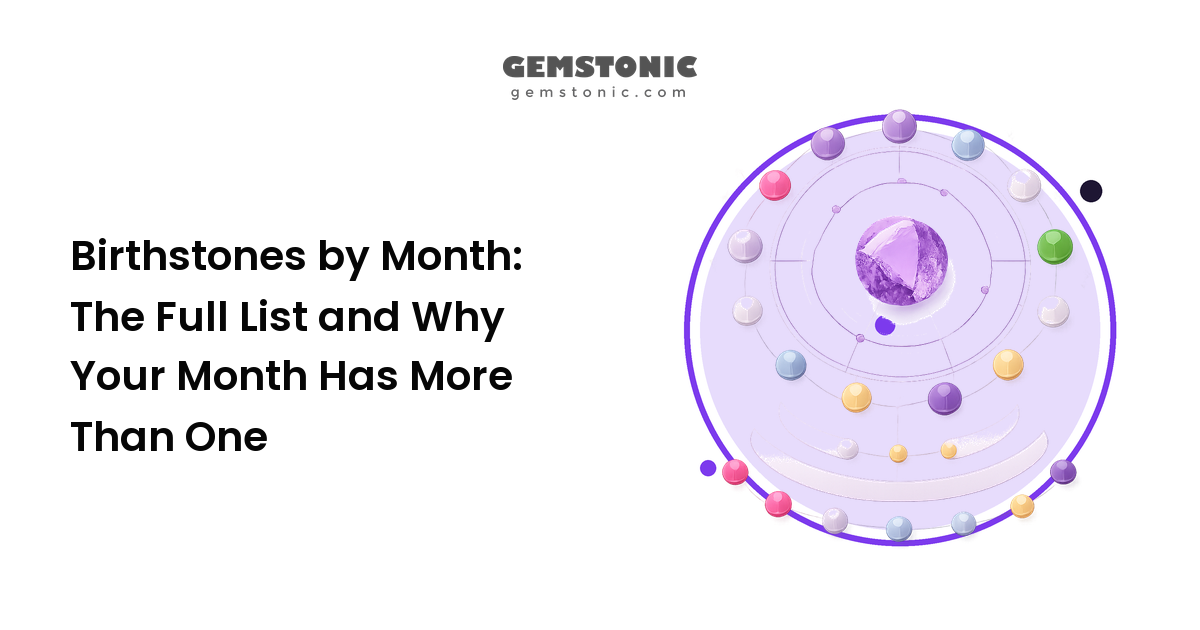
The takeaway up front: most months have more than one birthstone, because several competing lists exist side by side — a modern list, an older traditional list, and zodiac associations that don't line up with calendar months at all. None is the single "correct" answer. So the right move isn't to memorize one chart; it's to know which list you're reading, pick the stone that suits the person and how they'll wear it, and treat the meaning as cultural tradition rather than fact. This guide gives you the full month-by-month list and the judgment to choose well.
Why your month has more than one birthstone
Birthstones feel ancient and fixed, but the version most people quote is surprisingly modern. The idea traces back through centuries of folklore, yet the standardized list on store displays was largely settled by the jewelry industry in the 20th century — and revised since. That's why you'll run into three overlapping systems:
- Modern birthstones — the widely used commercial list. This is what most retailers show and what you'll usually be handed if you ask "what is my birthstone."
- Traditional birthstones — older associations, sometimes drawn from antique or regional customs, that predate the modern standardization. For several months they differ from the modern stone.
- Zodiac (astrological) birthstones — tied to star signs, not calendar months. Because each sign spans parts of two months, these rarely match the monthly list cleanly.
Add stones adopted in other countries and the occasional newer addition, and one month can carry several "official" answers. When two sources disagree, neither is wrong — they're just citing different lists.
The full birthstone list by month
Here's the rundown, modern stone first, with notable traditional or alternate stones where they differ. The meanings below are qualities each stone has traditionally been associated with — folklore and symbolism, not established effects.
January — Garnet
Deep red and durable, garnet traditionally symbolizes protection, loyalty, and steady friendship. A practical everyday stone at a friendly hardness.
February — Amethyst
Purple quartz, long associated with calm, clarity, and sobriety in folklore. Affordable, widely available, and reasonably hard-wearing.
March — Aquamarine (traditional: Bloodstone)
Pale sea-blue beryl tied to tranquility and safe passage; the older traditional stone is bloodstone, a dark green chalcedony flecked with red.
April — Diamond
The modern April stone, associated with strength and enduring love — part of why it dominates engagement rings. (Rock crystal appears in some older lists.)
May — Emerald
Vivid green beryl symbolizing renewal and growth. Beautiful but commonly oiled and prone to internal fractures, so it needs gentler care than its hardness suggests.
June — Pearl, Moonstone, or Alexandrite
June is the clearest example of "more than one." Pearl is the classic, moonstone the ethereal alternative, and alexandrite the rare color-change stone — three very different choices for the same month.
July — Ruby
Red corundum, traditionally the stone of passion, vitality, and protection. Hard and tough, it wears well in daily jewelry.
August — Peridot (alternates: Spinel, Sardonyx)
Bright yellow-green, peridot is linked to strength and good fortune. Spinel is a modern alternate; sardonyx is the older traditional stone.
September — Sapphire
Blue corundum (though sapphire comes in many colors), associated with wisdom, loyalty, and nobility. Extremely durable — an excellent everyday gem.
October — Opal or Tourmaline
Opal's shifting play-of-color makes it the romantic choice, but it's soft and porous and needs careful handling; tourmaline, available in nearly every color, is the more rugged modern alternate.
November — Topaz or Citrine
Warm and golden, both are affordable and widely available. Citrine (golden quartz) and topaz (often blue or yellow) trade places depending on the list you read.
December — Turquoise, Tanzanite, or Blue Zircon
December leans blue, with three common options: turquoise (ancient and porous), tanzanite (a striking but fragile modern favorite), and blue zircon (the older traditional stone, not to be confused with cubic zirconia).
How to actually choose the right one
A list tells you what's available; choosing well means matching the stone to the person and the purpose. Here's the reasoning that prevents a disappointing gift.
Lead with how it will be worn. A daily ring takes far more abuse than earrings or an occasional pendant. For everyday wear, lean toward the harder, tougher options in the month — sapphire, ruby, diamond, garnet — and steer away from soft or porous ones (opal, pearl, turquoise, tanzanite) unless they'll be protected and gently handled. A gem that scratches or chips within months becomes a regret, not a keepsake. Knowing a stone's hardness and treatment status up front is the homework that separates a lasting gift from a fragile one; our guide to choosing a gemstone walks through how hardness, treatments, and value actually work.
Pick the variant that fits the person, not the chart. When a month offers several stones — June, October, and December especially — that's freedom, not a dilemma. Choose by their favorite color, their style, and your budget: someone who loves understated classics may prefer a pearl; someone drawn to fire and color, alexandrite or opal. The "right" birthstone is the one they'll actually want to wear.
Use meaning as a thoughtful touch, not a promise. The traditional symbolism — protection, calm, loyalty — is a lovely reason to pick one stone and to write a heartfelt card. Just present it as the tradition it is. Birthstone meanings are cultural folklore, not medical or healing effects, and nothing here is health advice; enjoy the lore for what it is.
Two practical situations follow from all this. You may want to gift a stone that isn't technically the recipient's birthstone, because they love the color or it suits a piece you've found — completely fine; a stone someone adores beats the "correct" one they're lukewarm about. Or budget or durability may push you toward a substitute in the same color family: a sapphire instead of a fragile tanzanite for December, a garnet in place of a pricier red stone for July. Honest, disclosed substitution is sensible, not a compromise of the sentiment. The meaning lives in the gesture and the color story, not in a single mandated mineral.
FAQ
What is my birthstone if I find two different answers?
You've almost certainly hit the modern list and the traditional (or zodiac) list, which differ for several months. Neither is wrong. For a gift, the modern list is the safest default since it's what most retailers use, but you're free to choose a traditional alternate or a stone whose color the person simply loves.
Why does my month have more than one birthstone?
Because multiple lists coexist: a modern commercial list, older traditional associations, and zodiac stones tied to star signs rather than months. Some months (notably June, October, and December) also gained popular alternates over time. A month with several stones gives you options, not a contradiction.
Do birthstones have real powers or healing properties?
The qualities tied to birthstones — protection, calm, loyalty, and the like — are cultural tradition and symbolism, not demonstrated effects, and they aren't medical advice. Enjoy the meaning as folklore and a thoughtful way to personalize a gift, and don't rely on any stone for health purposes; see a professional for medical concerns.
Can I give someone a birthstone that isn't their actual birth month's?
Yes. Birthstones are a tradition to draw on, not a rule. If a different stone suits their taste, style, or your budget better, give that one. A gem someone genuinely loves is a better gift than the "correct" stone they don't.
Which birthstones are durable enough for everyday wear?
The toughest, most scratch-resistant monthly stones are sapphire, ruby, diamond, and garnet, which hold up well to daily use. Softer or more delicate options — opal, pearl, emerald, turquoise, tanzanite — are best worn occasionally or in protected settings, with gentler cleaning and storage.
Next step
Birthstones are a tradition worth using well: know that most months offer more than one stone, pick the variant that genuinely fits the person and how they'll wear it, and treat the meaning as the heartfelt folklore it is. Check the stone's hardness and care needs before you buy, so the gift lasts as long as the sentiment. Explore the stones behind every month — how to choose them, care for them, and understand their value — at Gemstonic.